Pearson Edexcel · GCSE · English Literature
Writing – Producing Clear and Coherent Text
Mastering the art of clear and coherent writing is the key to unlocking the highest grades in GCSE English Literature. This guide equips you with the analytical tools, structural frameworks, and linguistic precision needed to transform your reading into powerful, examiner-impressing arguments.
- 4 min read
- 2 worked examples
- 4 practice questions
- 8 key terms
Study Notes
Overview
Producing clear and coherent text is the foundation of success in GCSE English Literature. Examiners are not just looking for what you know about a text; they are assessing how effectively you communicate that knowledge. This topic focuses on your ability to construct a compelling argument, maintain a critical analytical style, and use accurate Standard English. By mastering these skills, you ensure that your insights are conveyed with maximum impact, directly targeting the higher mark bands.

The Core Components of Coherent Writing
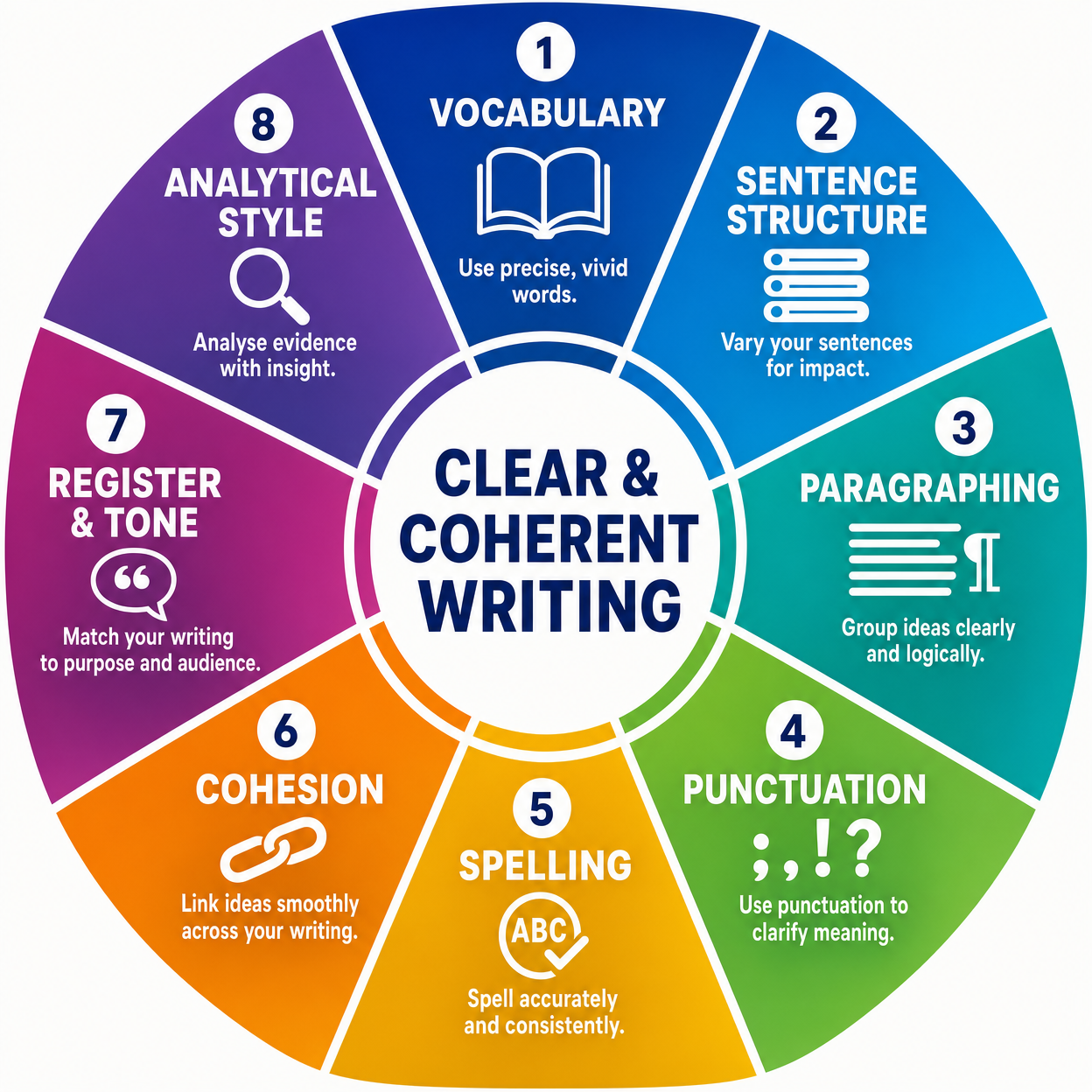
1. Critical Style and Informed Response
A critical style means writing as an analyst, not just a storyteller. You must move beyond describing the plot to evaluating the writer's choices and their effects.
Key Strategies:
- Use analytical verbs: "suggests", "implies", "conveys", "highlights", "foreshadows".
- Maintain an objective tone: Avoid overly informal language or unsupported personal opinions.
- Frame your response around the writer's intent: "Shakespeare deliberately constructs..."
2. Logical Organisation and Paragraphing
Coherence relies on a logical flow of ideas. Each paragraph should focus on a single, clear point that directly answers the question.
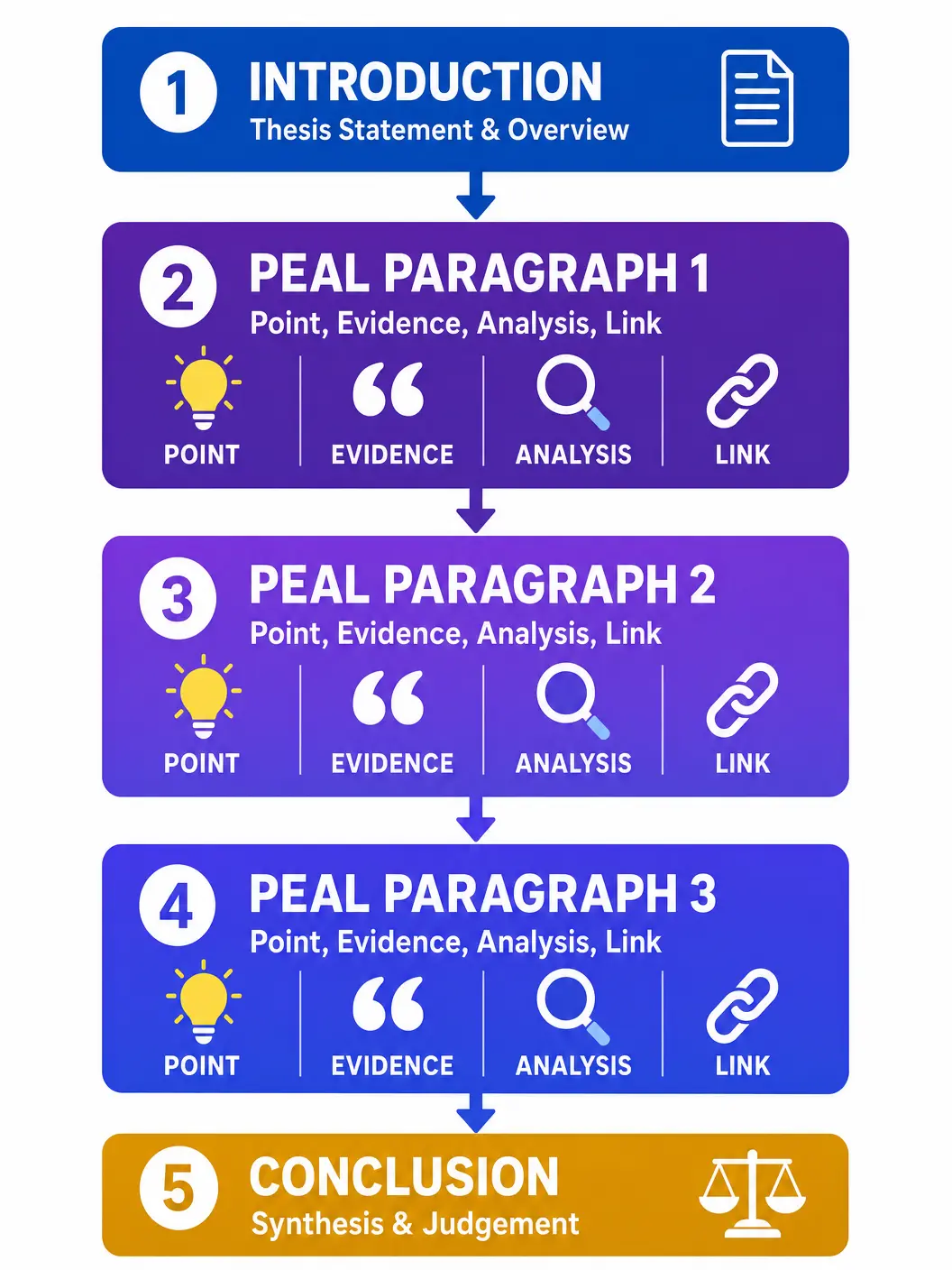
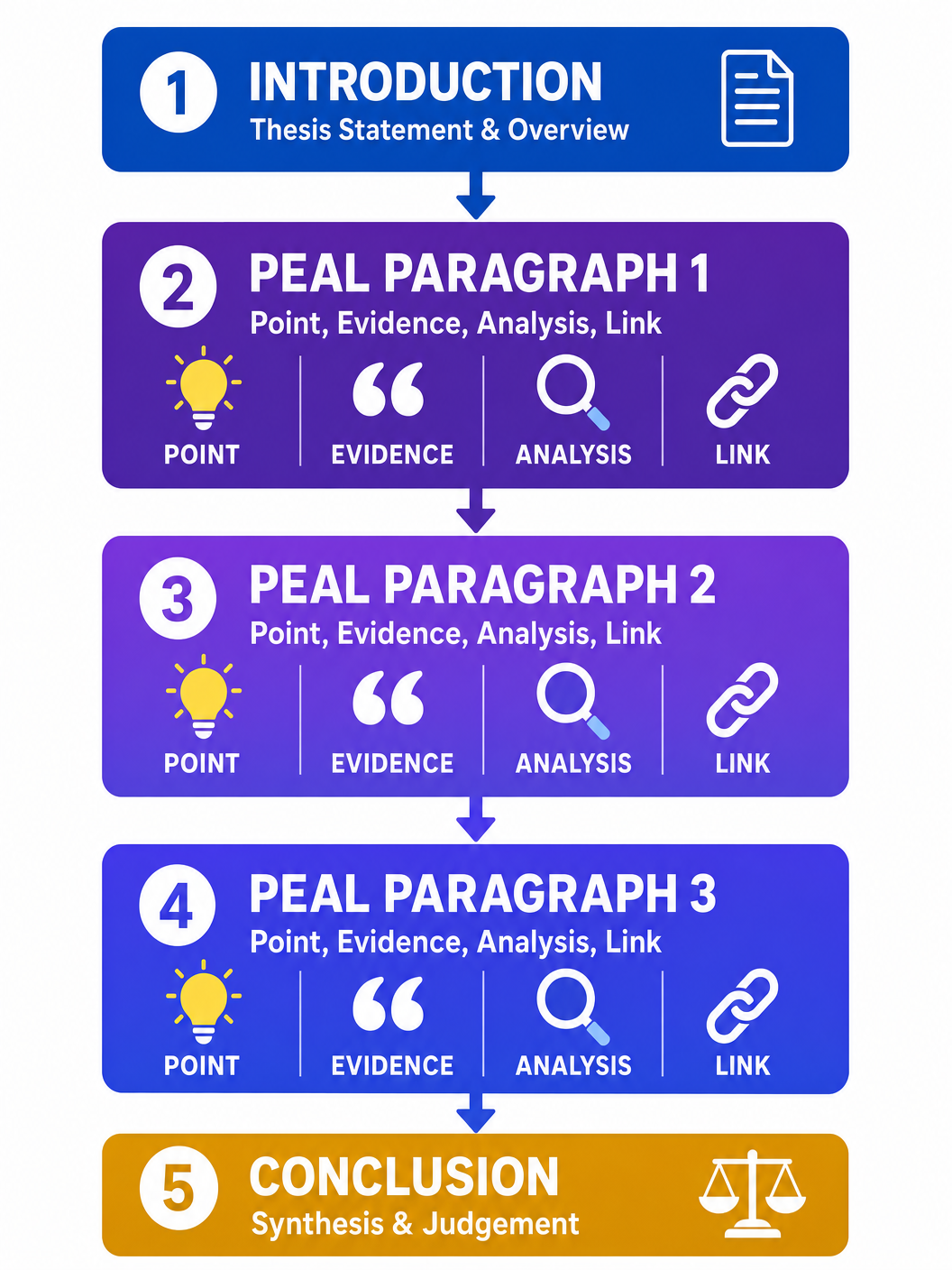
The PEAL Structure:
- Point: A clear topic sentence outlining your argument for the paragraph.
- Evidence: A seamlessly embedded quotation.
- Analysis: Detailed exploration of the writer's methods (language, form, structure) and their effects.
- Link: Connecting back to the question, the wider text, or relevant context.
3. Effective Use of Evidence
Quotations are the fuel for your analysis. However, merely dropping quotes into your essay is insufficient; they must be integrated and analysed.
Embedding Quotations:
- Poor: There is a quote that shows he is angry. "He slammed the door."
- Excellent: The character's barely suppressed rage is evident when he "slammed the door", a violent action that suggests a loss of control.
4. Precision in Vocabulary and Sentence Structure
Your choice of words and how you arrange them significantly impacts clarity.
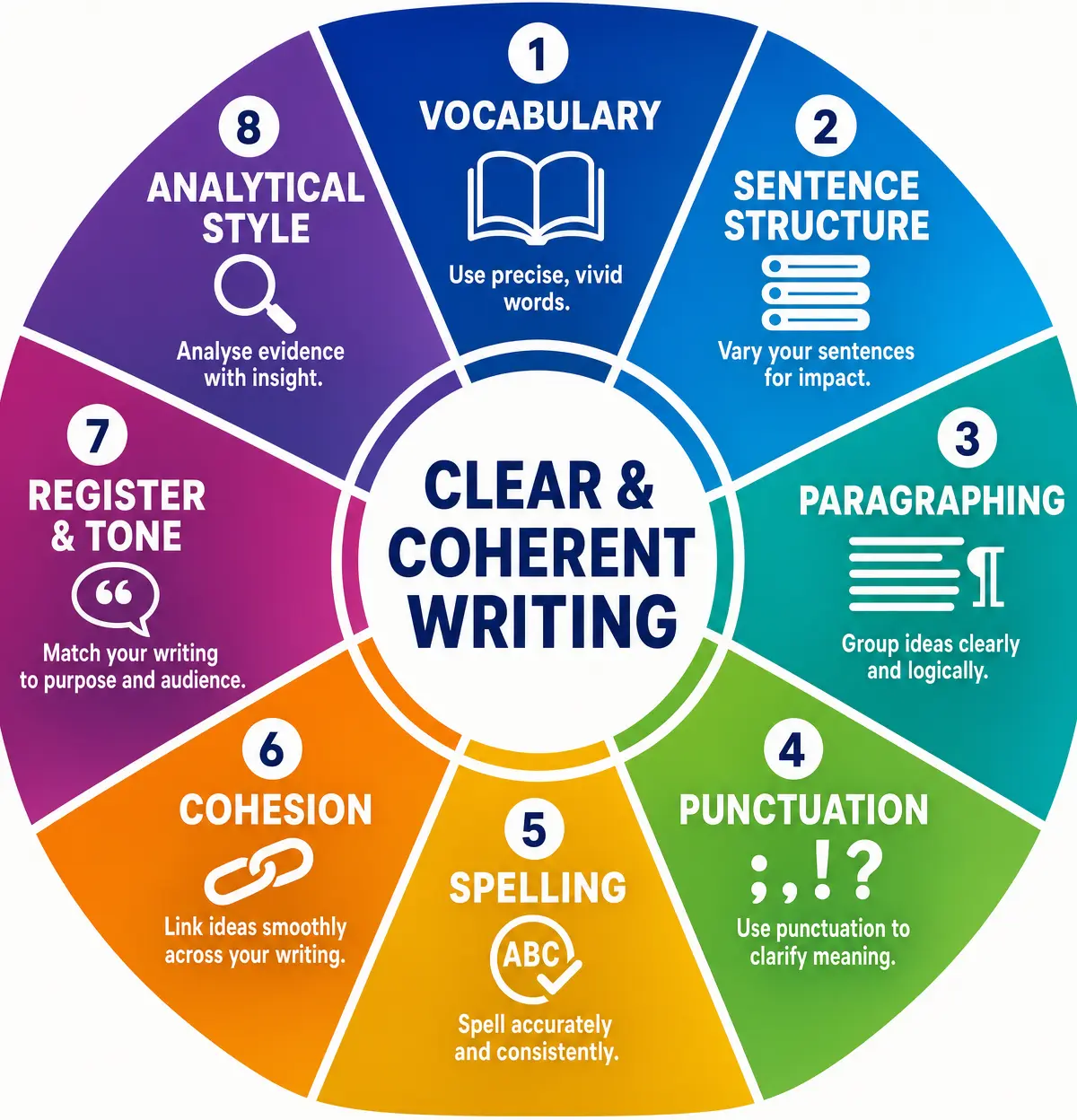
- Terminology: Use precise literary terms (e.g., juxtaposition, semantic field, dramatic irony) to articulate your points efficiently.
- Sentence Variety: Use complex sentences to explore nuanced ideas and short, simple sentences for emphasis or dramatic effect.
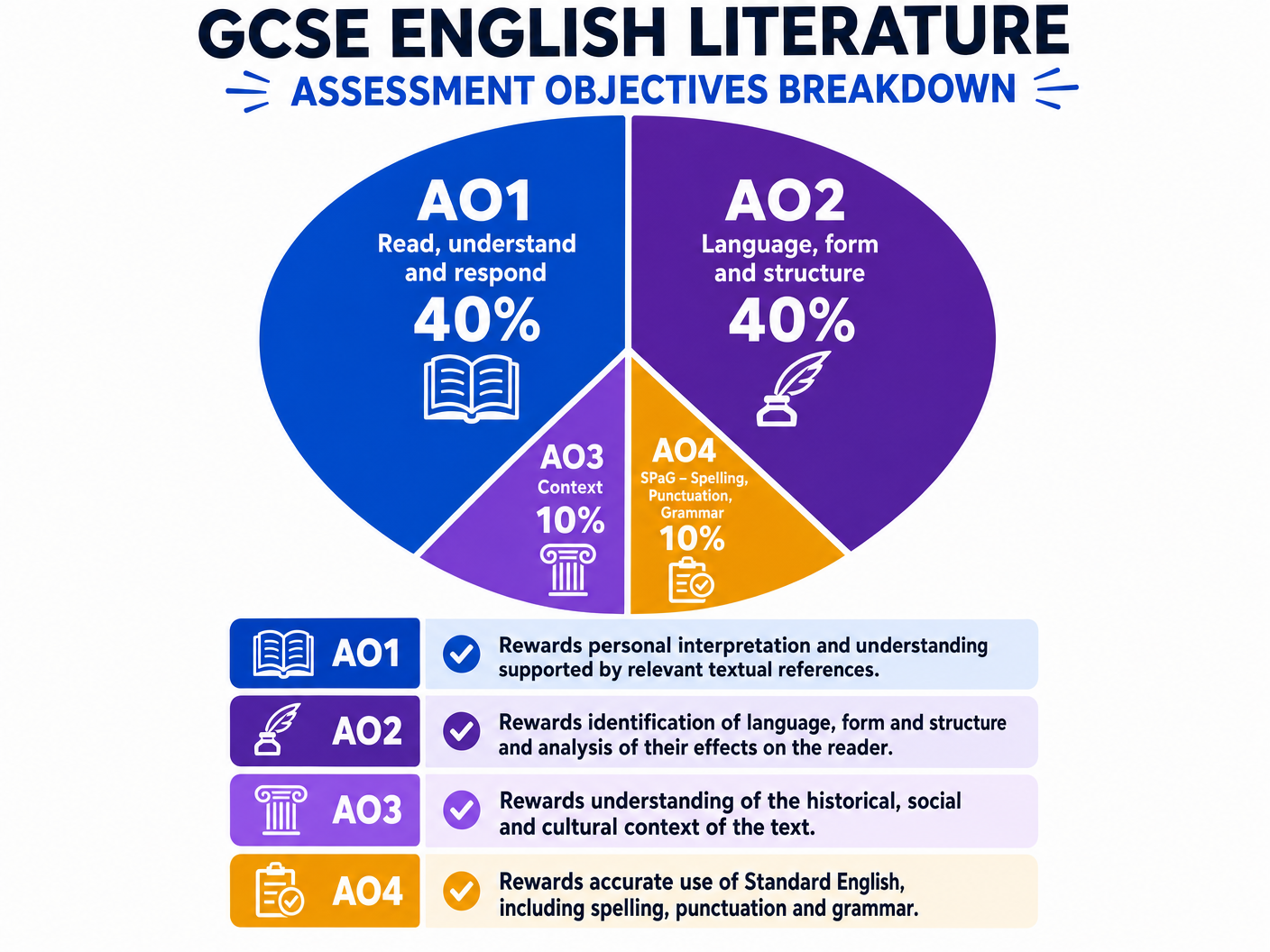
5. Accuracy (SPaG)
Spelling, Punctuation, and Grammar (SPaG) account for up to 4 marks in specific literature questions.
- Ensure accurate spelling of key character names and literary terms.
- Use a range of punctuation accurately to clarify meaning.
- Always write in Standard English.
Context Integration
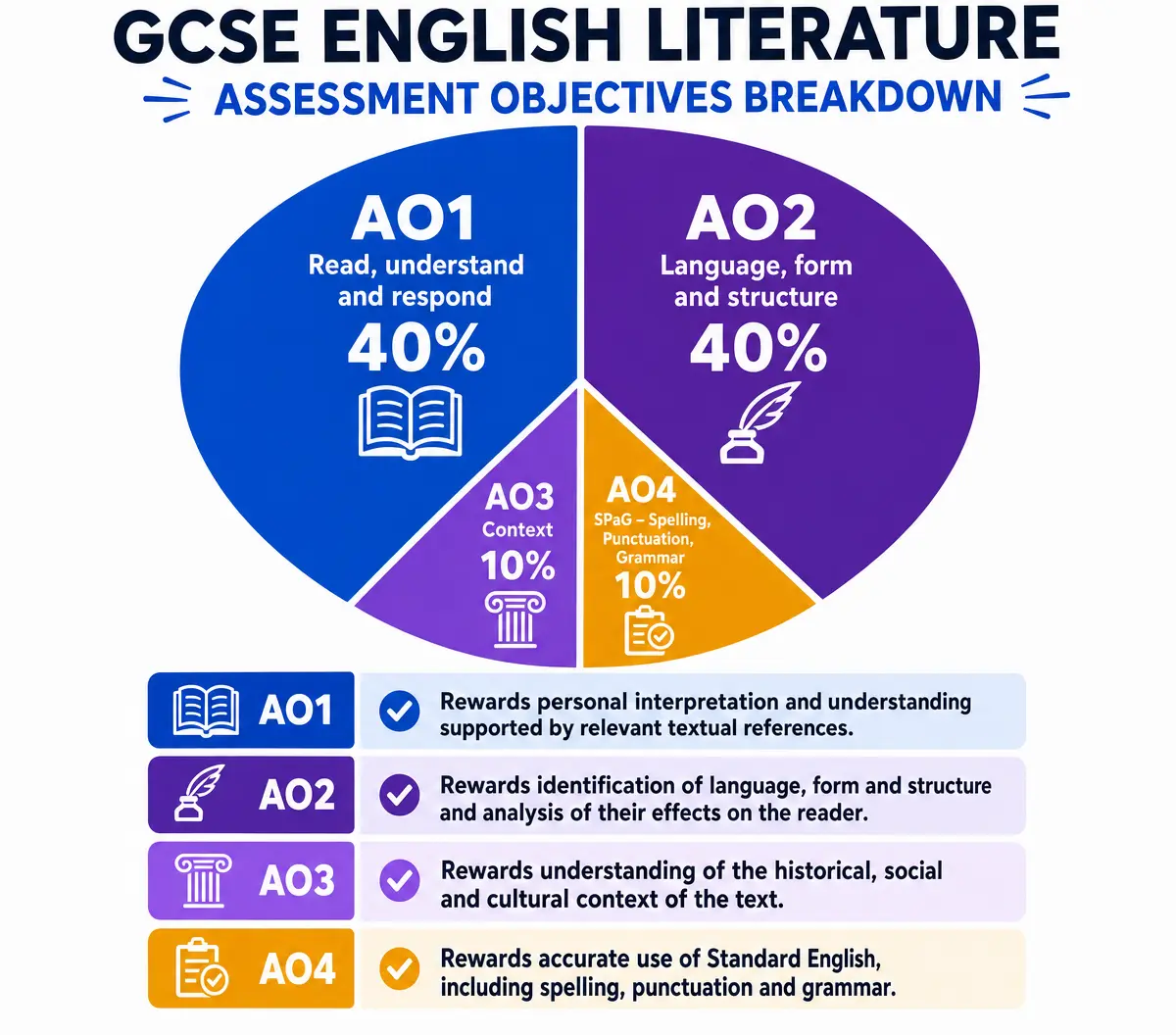
Context (AO3) should illuminate your analysis, not sit isolated in a separate paragraph. When discussing a text, consider how the historical, social, or literary context influenced the writer's choices and the original audience's reception. Weave this into your PEAL paragraphs to demonstrate a holistic understanding.
Visual Resources
3 diagrams and illustrations
Interactive Diagrams
1 interactive diagram to visualise key concepts
Conceptual Flow Outline
The Coherent Essay Planning Process
Worked Examples
2 worked examples — open one to explore the question and available guidance.
Practice Questions
Test your understanding — click to reveal model answers
Read the provided extract. How does the writer structure the text to interest the reader? (8 marks)
Hint: Focus on shifts in perspective, pacing, and how the beginning connects to the end.
Starting with this extract, explore how the writer presents the theme of power. (30 marks)
Hint: Consider both physical power and psychological power. How does power shift throughout the text?
Compare how the writers convey powerful emotions in Text A and Text B. (16 marks)
Hint: Use comparative discourse markers (e.g., similarly, whereas). Compare the *methods* used, not just the emotions.
Evaluate the statement: 'The ending of the novel is entirely pessimistic.' (20 marks)
Hint: Acknowledge the pessimistic elements, but look for nuances or alternative interpretations that suggest hope.